
When Change Arrives Uninvited: How to Navigate Unexpected Career Transitions
Change has a habit of arriving without warning. One day, life feels stable and familiar; the next, the ground seems to disappear beneath your feet. When something ends unexpectedly — a role, a career, or a professional identity — moving on can feel anything but simple.
Letting go of the old to make space for the new is often a long and emotionally demanding process. And while it can be deeply uncomfortable, it's also a natural part of growth.
When a Career Ends Before You're Ready
A close friend of mine experienced this first-hand when forced to leave his career for reasons entirely beyond his control. The emotional impact was immediate and complex.
He felt grief at losing something he had spent years mastering. At the same time, he felt flashes of excitement about the possibilities ahead. Confusion, denial, low mood, brief optimism — all of it came in waves.
This pattern is one I see repeatedly in people who have lost their jobs or experienced an abrupt career change. The emotional fallout can be disorientating, and for a time, motivation often disappears entirely. What's important to understand is this: these reactions are not signs of weakness — they are part of the process.
Why Emotional Turmoil Is a Normal Response to Change
Unexpected change follows recognisable psychological patterns. One widely used framework for understanding this is the Kübler-Ross change model, originally developed to describe responses to sudden, uncontrollable life events.
While everyone moves through these stages differently — and at their own pace — the model helps explain why change can feel so chaotic.
The Emotional Stages of Career Change

Shock
When change first becomes unavoidable, self-confidence often takes an immediate hit. Many people describe feeling detached, confused, or as though what's happening "isn't real".
Disbelief
As a short-term coping mechanism, denial can provide a sense of control. You may find yourself searching for evidence that the situation will reverse itself, or refusing to fully accept what's happened.
Anger and Despair
Once reality sets in, frustration often follows. Anger may be directed outward — at organisations, systems, or individuals — or inward, in the form of self-blame. Irritability, impatience, and resentment are common at this stage.
Depression
Motivation and self-esteem can drop sharply. From this low point, the future can feel bleak and directionless. Energy disappears, and confidence feels distant.
Acceptance
Gradually, attention begins to shift forward. Anxiety doesn't vanish overnight, but it's joined by something new: curiosity, hope, and even excitement. You may not yet know what comes next, but you begin to trust that you'll find a way through.
Experimentation
This stage is often messy and unpredictable. One day you're considering retraining; the next, you're imagining a completely different lifestyle. Ideas appear and disappear quickly — and that's okay. Exploration is part of rebuilding.
The Turning Point: Searching for Meaning
The career path that ultimately sticks is rarely the first idea that comes to mind. It's the one that feels meaningful — the one that fits into your personal story.
At this point, the bigger picture starts to make sense. You begin to understand why certain events happened, how they connect, and what they reveal about what truly matters to you. Humans have a deep need to make sense of disruption, and meaning is what brings the pieces together.
Rebuilding and Moving Forward
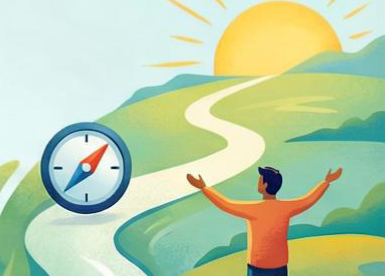
When change is embraced rather than resisted, balance slowly returns. New routines form, confidence rebuilds, and a sense of direction re-emerges. This isn't about rushing into the next role — it's about creating a future that feels sustainable and aligned.
How to Cope with Unexpected Career Change
If you're in the middle of a sudden transition, a few principles can help:
- Acknowledge your emotions. Don't minimise or suppress what you're feeling — it's all part of the process.
- Talk to others. Share your experience before internal pressure starts affecting relationships.
- Let go of shame. Job loss and career disruption happen for many reasons — often beyond your control.
- Ask for support. Whether from friends, professionals, or structured career guidance, help can make the process clearer and less isolating.
If you're struggling to regain motivation or direction, starting with a free career test can help you make sense of your strengths, values, and options — especially when everything feels uncertain.
Because while change may arrive uninvited, it can still lead you somewhere meaningful.
- The Career Team
Be among the first to access our FREE career assessment and personalised career matching — designed to help you understand what suits you, not just what's available!
No spam. Unsubscribe anytime.